
‘Bang for Your Buck’ Showcases Experts, Resources for Medicare Open Enrollment Season
Published October 28, 2026
For the third consecutive year, the Alliance for Aging Research – in partnership with The Hill – convened policymakers, open enrollment experts, and advocates on a timely discussion about the future of Medicare benefits, the impact of drug price negotiations, and what beneficiaries need to know when selecting a Medicare plan for 2027.

“Bang for Your Buck: Get the Most from Your 2027 Medicare Benefits” expanded the scope of previous convenings beyond prescription drug plans to address the most common questions about Medicare during open enrollment, which runs through December 7.
Hosted at Top of the Hill events center in Washington, D.C., Alliance President & CEO Sue Peschin, MHS, kicked off the morning with a Sponsor Segment conversation with Alliance Senior Vice President of Public Policy & Government Relations Scott Frey.
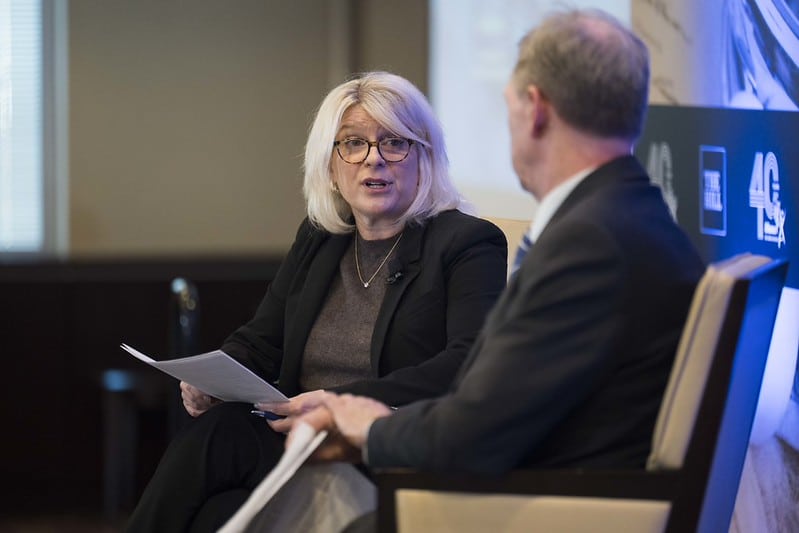
“As many as 5 million people will lose Medicare or prescription drug coverage due to Medicare Advantage Plan terminations – and all those folks will have to choose new plans,” said Peschin. “Our message today is simple: Even if you’re happy with your Medicare coverage today, use Open Enrollment as an opportunity to take another look and ensure it’s working to meet your needs.”
The Alliance shared the 60-second version of its video, “What to Know About Managing Your Medicare Prescription Drug Costs in 2027,” a PSA created for 2027’s Open Enrollment period during the Sponsor Segment. They also highlighted resources available at LowerOutOfPocketCosts.org.
John Brooks, Deputy Administrator, Chief Policy & Regulatory Officer, Centers for Medicare & Medicaid Services (CMS) joined Kathleen Koch, Contributing Editor, The Hill and encouraged beneficiaries to go online to Medicare.gov to compare plans to each other, look at the updated provider directory, and even research pharmacies within the plan.

Brooks said that CMS continues to improve patient engagement and continues to engage with plans to streamline the cumbersome prior authorization process.
“We do have several patient listening sessions as part of this process to provide their perspective on the clinical value of these products,” he said.
Koch asked what CMS can do to ensure beneficiaries are getting what they signed up for and that Medicare Advantage plans are, in fact, a money-saver.
Brooks said that “there’s a real balancing act” at CMS in pushing for reforms and ensuring beneficiaries have what they need and making sure it’s a good value for both taxpayers and beneficiaries.
A panel, “Medicare Matters: Affordability, Access & Choice” followed featuring the following experts:

- Kirsten Axelsen, Senior Policy Advisor, DLA Piper: “There’s been a continued exit of standalone drugs plans from the market…and one of the concerning things about that is that when we have fewer, there are fewer choices, there are more restrictive formularies, and people may be facing a situation in that people will not get as much and pay slightly more than last year.” She added later in the program: “The perception of paying more for less is important… We need to be looking at it from the patient experience: ‘Is the beneficiary experience getting better when taking a price negotiated drug?’”
- Jonathan Blum, Nonresident Senior Scholar, USC Schaeffer Institute: “You have about 75 people who are the senior career leaders for CMS that run the agency, that make the decisions to keep the Medicare program going and there’s a lot of turnover [withing that level]….and that’s what I worry most about CMS…the continuity of the programs is kept at the senior career level and that’s what we need to continue to watch as CMS continues to set policies.” He said that the key debate is how to finance the program for more beneficiaries in the Medicare Advantage program because “assumptions that were true in 2003 need to be investigated for 2026/2027.”
- Bonnie Duffy, Convener, MAPRx Coalition: “When a beneficiary is choosing a plan this year, they can see if a drug is on the plan, but they cannot see the utilization management piece…there are processes that plans engage in now that can delay treatment and that’s one of the biggest concerns.” She added that she’d like to see CMS do more education and about the Medicare Prescription Payment Plan so beneficiaries will know if it’s a good option for them. “Policymakers should and would be more involved…and have more keen eye on beneficiary experience.”
A panel discussion on navigating Medicare featured a conversation and audience Q&A with the following:

- Brandy Bauer, Director of SHIP Technical Assistance Center: “There’s a lot of decision fatigue – even if your plan is not going away, there’s a lot of motivation and research needed on the part of the beneficiary to understand their needs and make enrollment decisions.” She warned consumers to not get “seduced by sleek marketing” and to utilize the Senior Medicare Patrol (SMP) Resource Center to help identify fraud and scams.
- Lindsey Copeland, Director of Federal Policy, Medicare Rights Center: “Right now [in the marketplace] its apples and cumquats are oranges.” Ensuring that relief pathways are easier to access is important…and making sure people are in the coverage they need, when they need it.” She reiterated that help is available. “If you’re sitting at home and can’t afford your Medicare bill, reach out….”
- Rebecca Kinney, Director, Office of Healthcare Information & Counseling Office, Administration for Community Living: It’s really important to ensure that when you’re looking for help that it’s from someone who is licensed to do so; knowing if they’re attached to a broker or program, for example. So, utilizing the unbiased and free help from a SHIP is important in finding the right match without outside pressure. “Take a look a your options. Look at what is happening and reach out to a SHIP or someone you trust to investigate,” she said.
Read a recap from The Hill and stay tuned for the recording.
Additional Resources:
- Alliance’s Project LOOP: LowerOutOfPocketCosts.org
- Medicare: Medicare.gov
- State Health Insurance Assistance Program (SHIP): ShipHelp.org and 877-839-2675
- Senior Medicare Patrol (SMP) Resource Center: SMPResource.org
Photography by Craig Hudson.